

Most parents ask me about exeat weekends and airport transfers. Almost nobody asks what happens if their child is ill at boarding school, and it is the thing that frightens them most. It usually comes out near the end of a call, phrased carefully, as though it were a silly question.
It is not a silly question. It is the right one. Exeats are a diary problem. A child who is unwell four thousand miles from you, in a country whose health system you have never used, in a language they are still getting comfortable in, is something else entirely.
So here is how it actually works. Not a reassuring sentence, the real shape of it, including the practical local details that are hard to find anywhere else.
The short version
- ✓Your child's school handles day-to-day illness through its own medical arrangements, and boarding schools are well set up for this.
- ✓If it is life-threatening, the answer is always 999. For anything urgent where the right service is not obvious, NHS 111.
- ✓Kent and Canterbury Hospital does not have an A&E. Where to go is set out further down.
- ✓Where in-person support is needed beyond what the school provides, that is what an educational guardian is for.
- ✓If I am told about something significant, I contact you promptly and keep you updated.
What the school does when a boarder is unwell
Boarding schools are required to have appropriate arrangements for looking after boarders who are ill or injured, although exactly how that provision is organised varies from school to school. Some have dedicated health centres or infirmaries, others organise it differently, and the names vary too, from the san to the medical centre. If you are still choosing a school, that is a fair and unembarrassing question to ask at an open day: who is on site overnight, what happens at the weekend, and what the school does if a pupil needs to go to hospital.
Boarding schools are genuinely good at this, and I want to be clear about that rather than talk it down. A temperature, a sore throat, a sprained ankle, the sickness bug that goes round a boarding house every February. Your child is looked after, monitored, kept off games, and usually back in lessons within a day or two. Many schools have infirmary beds for exactly this. Many will send a member of staff with a pupil who needs to go to hospital.
That is most illness, and the school handles it without needing me at all. I would rather say so plainly than pretend a guardian is required for a headache. If you want the wider picture, this is what an educational guardian actually does across a full year.
Where the school's role may end and a guardian's role begins
Schools do a great deal. What they cannot easily be is one continuous, familiar adult who belongs to your child alone, in your corner, for as long as it takes. That is the gap an educational guardian is there to fill, and it shows up in four fairly practical ways. Welfare and safeguarding arrangements are part of what AEGIS accreditation covers.
Time and individual attention
When I am the attending adult, I can focus on your child rather than a whole boarding house. Hospital visits often involve a great deal of waiting, and having one familiar adult able to stay, listen and keep parents updated can make a difficult situation much easier. If I am unable to attend personally, my vetted emergency-cover arrangements apply.
Continuity
Houseparents change, staff rotate, terms end and the school closes for the holidays. A guardian is the one adult who stays the same across all of it, and who already knows your child's history without being briefed.
Somewhere that is not school
Where a school agrees a pupil would be better off out of the boarding house for a few days, they need somewhere to go. That is the part of this that is a home rather than an institution.
Your point of contact, in your time zone
The school will contact you. I am the person who then rings you, stays on the phone, explains what the doctor actually said, and tells you how your child seemed. Then follows it up the next day.
The Canterbury detail that is genuinely useful to know in advance
If a situation is life-threatening, call 999. That includes things such as loss of consciousness, severe breathing difficulty, or serious bleeding that cannot be stopped. If you are unsure whether a situation needs 999, or which urgent service is the right one, use NHS 111.
NHS 111 is free, available at any hour, and directing you to the appropriate service is precisely its job, whether that turns out to be an urgent treatment centre, an out-of-hours GP, an emergency department or 999. Anyone who grew up with the NHS uses it instinctively. Anyone who did not often has no idea it exists, and it saves a great deal of time and confusion.
Now the local part, which is worth knowing before you need it.
Kent and Canterbury Hospital does not have an accident and emergency department. It has an urgent treatment centre for minor injuries and minor illnesses. It is not the place an ambulance would ordinarily take a child requiring a full emergency department.
Here is the picture as it stands.
| Where | What it is | Availability |
|---|---|---|
| Kent and Canterbury Hospital, Ethelbert Road, CT1 3NG | Urgent treatment centre. Minor injuries and minor illness. No A&E | Minor injuries are available 24 hours. Other urgent treatment services have specific opening hours and these can change, so check current East Kent Hospitals guidance or NHS 111 before attending |
| William Harvey Hospital, Ashford, TN24 0LZ | Full 24-hour emergency department | Open 24 hours. About 32 minutes by car from my home, up to 45 at busy times |
| Queen Elizabeth The Queen Mother Hospital, Margate, CT9 4BG | Full 24-hour emergency department | Open 24 hours. About 34 minutes by car from my home, depending on traffic |
None of this is a criticism of anyone. It is simply local information, and local information is worth something in an emergency. Knowing which service is open, what it treats and how to get there quickly is the difference between a straightforward evening and a confusing one. It is the sort of thing you learn by living somewhere and using it, and it is a practical part of what educational guardianship in Canterbury actually involves.
One honest note. The model for urgent care at Kent and Canterbury Hospital is under review, as services across the NHS regularly are. I keep an eye on it, and if the position changes this page changes with it. Please always check current NHS guidance at the time you need care rather than relying on a webpage you read months ago.
Who goes with your child
Normally, me.
That is the point of how I have built this. In the normal course of the service I am the named educational guardian, the host, the school's named contact and the emergency contact, and those are deliberately the same person rather than four. Your child does not have to explain themselves to somebody new on the worst evening of their term, and you are not passed between people. That is the practical difference a guardian who lives locally makes.
I also want to be straightforward about the limits of that, because a promise with no limits is not worth much.
I am one person. There will be times when I am already with another student, unwell myself, or away. For exactly those situations there is pre-arranged, vetted emergency cover, and you will know who that is before your child arrives rather than meeting them for the first time in a crisis. Using cover is not a failure of the service, it is part of how the service is designed to be safe.
What I commit to
- ✓In an emergency, my emergency number is there at any hour. If I am with a client or briefly unable to answer, leave a message or text and I will call back the moment I am free. In a genuine emergency I drop everything, and where I need to be there in person I go as quickly as safe travel allows.
- ✓Calls and messages from the school: I get back to them as soon as I can, within the same day.
- ✓Your emails and messages: as soon as I can, and the same day wherever possible.
- ✓Anything routine: within one working day.
I also work as a counsellor, so there will be times, for example when I am in a session, when I cannot pick up the phone straight away. That is exactly why I set expectations I can keep, rather than promises that sound good on a website.
These are the same for every family whatever package they are on. The packages differ in how much of my time is included, how often I check in and how often you get a written report. They do not differ in how fast something urgent is answered.
On cost, so there is no ambiguity: there is no emergency call-out surcharge. The initial emergency response and call-out are included, and so are the first three hours of attendance at hospital. Beyond three hours, additional in-person attendance is charged at my published emergency rate of £75 an hour, in half-hour units, and that rate is on the pricing page rather than presented to you afterwards. I would rather you knew that in advance than discovered it later.
Registering with a GP, and why it should happen before your child needs one
The worst time to work out how the NHS works is the moment you need it.
Where the relevant Immigration Health Surcharge has been paid as part of your child's immigration application, they can generally access NHS care on the same basis as others entitled to NHS hospital treatment. Some things may still carry a charge, prescriptions, dentistry and eye care among them. Your child's own immigration position is the authority here, and GOV.UK is where to check it rather than any guardianship website, mine included.
Registering with a local GP surgery is free, and needs less than most people expect. Name, date of birth and address. NHS guidance is explicit that you do not ordinarily need identification, proof of address, proof of immigration status or an NHS number to register. In practice, a surgery registering a child under sixteen may ask to see documents such as the child's birth certificate, and may ask the adult registering them for identification, so it is worth having both to hand rather than discovering it at the desk.
The one thing to do this week: ask your child's school which GP surgery they are registered with, and ask for it in writing. Arrangements vary between schools, so ask whether GP registration has already been completed. It takes one email to find out, and it is the single most useful piece of admin in this entire article.
Who can actually consent to treatment, and what your authorisation is for
This is the part most guardianship websites get wrong, usually by promising more than anyone can deliver, so I would rather set it out accurately.
Educational guardianship does not transfer parental responsibility. It stays with you. Any provider who suggests otherwise has told you something that is not correct.
Young people of sixteen and seventeen are generally presumed able to consent to their own treatment. For a great many boarding students, that answers the question on its own.
A child under sixteen may be able to consent for themselves where a clinician assesses them as having enough understanding to do so. Where a child cannot consent themselves, consent will normally need to come from someone with parental responsibility, which means you.
In a genuine emergency, clinicians can treat without waiting for parental consent where delay would put the child at risk. Nobody sits on a seriously ill child while a phone rings in another time zone.
So what is the written authorisation for? Quite a lot, and all of it practical. It records the arrangements you have agreed for me to support your child, identifies me as the adult you have appointed to attend and assist, provides important medical and contact information, and records your wishes about appropriate information sharing. It can make communication between you, me, the school and healthcare professionals much easier, but it does not override a young person's own rights to consent or confidentiality. What information a clinician can share will always depend on the circumstances, the young person's competence or capacity, and the law.
It also sets out arrangements for spending on your child's behalf, with a threshold agreed in advance, and an exception where something is needed immediately for their safety or welfare.
What it is not is a document that makes me your child's parent for the evening. It is the paperwork that means everyone knows who to call, what has been agreed and where the information is, which in practice is what makes a difficult night go more smoothly.
What if your child needs to leave school for a few days?
Sometimes a boarding house is the wrong place to get better. Too noisy, too public, too many people, and nowhere to be quietly miserable for two days. Many schools have an infirmary for exactly this. Sometimes what is needed is a home.
Here I want to be precise rather than reassuring, because the difference matters.
My guardianship support does not disappear because a bedroom is unavailable. A bedroom, however, cannot be promised without conditions.
Home From Home Canterbury has two homestay places. That is the whole house, and it is a deliberate limit rather than a temporary one. Where homestay is included or a place is available, and it is safe and appropriate for your child to stay here, I can look after them at Home From Home Canterbury with the agreement of you and the school. They sleep in a proper bed, they eat food someone cooked for them, and I keep an eye on them. Collecting a student who is unwell is not charged for.
Places are reserved for dates booked and confirmed in writing. That word is chosen carefully. I do not describe a bed as guaranteed, because a bed that is genuinely guaranteed at any moment, at any notice, all year round, is not something a two-place home can honestly offer.
If both places are taken, I do not simply hand the problem back to you. I work with you and the school to find a suitable arrangement, and I stay involved throughout: the calls, the GP, the school, the updates to you. What may change is the address. What does not change is that someone who knows your child is paying attention. More on homestay in Canterbury.

How and when you will hear from me
I cannot control whether the school, the hospital or your own child reaches you first, and I would not want to. What I can tell you is what I do.
If I am notified of a significant medical incident, I contact you promptly, whatever the hour where you are, and I keep you updated as things develop. Anything involving a hospital, an ambulance, a head injury, a night away from school, or a decision that needs you. I will not sit on that until it is a civilised hour in your time zone. I would far rather wake you than have you find out in the morning.
Same day, subject to what I am told and when: a GP appointment, a temperature that has gone on longer than it should, a child who has been in the health centre twice in a fortnight.
In your regular update: the small things, in context. Not an alarm, just the picture.
And afterwards you get the boring, useful ending: what was wrong, what was done, what the doctor said, whether they ate, whether they slept, and what I am watching for over the next few days.
One more thing that is easy to miss. Repeated small illnesses are sometimes not really about illness. Stomach aches before a particular lesson, headaches every Sunday evening, a child who is in the health centre far more often than the term warrants. My professional background working with children and young people means I tend to notice patterns like that, and I will raise them early with you and with the school.
To be clear about where that stops: I do not act as therapist to any young person for whom I am educational guardian, and I never will. If a student needs therapeutic support it comes from the school's provision or an independent clinician, and I will help you find it. What I bring here is an experienced eye and the willingness to say something before a pattern becomes a problem.
More about my background on About Becky.
Six questions worth asking any guardian before you need the answer
Ask these of me, and ask them of anyone else you are considering. There are good answers to all six. What matters is that you get one.
If my child is admitted to hospital tonight, who goes with them, and how long does it take that person to get there?
Which local services would you use, and for what? Do you know what is open, and when?
Are you the person who will come, or might it be someone else? If someone else, will I have met them?
What cover is in place when you are unwell, away, or already with another student?
What written authorisation do you hold from me, what does it cover, and what does it not cover?
How and when will I be told, and what do you do if it is the middle of the night where I am?
Common questions from parents
Should my child be registered with a local GP?
Yes, ideally before they need one. Ask your child's school which GP surgery they use and whether registration has already been completed. NHS registration is free and ordinarily needs only a name, date of birth and address, without identification, proof of address, proof of immigration status or an NHS number. When registering a child under sixteen a surgery may ask for documents such as a birth certificate, and may ask the adult registering them for identification. If the school has not arranged it, I will help.
Is there an A&E in Canterbury?
Kent and Canterbury Hospital does not have an accident and emergency department. It has an urgent treatment centre for minor injuries and minor illness. Minor injuries are available 24 hours, while other urgent treatment services have specific opening hours that can change, so check current East Kent Hospitals guidance or NHS 111 before attending. The nearest full 24-hour emergency departments are the William Harvey Hospital in Ashford and the Queen Elizabeth The Queen Mother Hospital in Margate. For anything life-threatening, call 999.
Can you consent to medical treatment for my child?
Not as a substitute for you. Educational guardianship does not transfer parental responsibility. A young person of sixteen or seventeen can generally consent for themselves, and a younger child may be able to if a clinician assesses them as able to understand the decision. Otherwise consent normally comes from someone with parental responsibility. In a genuine emergency clinicians can treat without waiting. What your written authorisation does is record the practical arrangements you have agreed, identify me as the adult you have appointed to attend and support your child, provide relevant medical and contact information, and record your wishes about appropriate information sharing. It does not override your child's rights to consent or confidentiality, and what healthcare professionals can share will depend on the circumstances and the law.
Will you tell me straight away, even if it is the middle of the night where I am?
If I am notified of something significant, yes. Anything involving a hospital, an ambulance, a head injury or a night away from school. Smaller things I tell you the same day.
Does it cost extra if my child ends up in hospital?
There is no emergency call-out surcharge, and the initial emergency response plus the first three hours of hospital attendance are included. Beyond three hours, additional in-person attendance is charged at my published emergency rate of £75 an hour, in half-hour units. It is all on the pricing page, published before you commit rather than added afterwards.
What if my child needs somewhere to stay while they recover?
If one of the two homestay places is available, and it is safe and appropriate for your child to stay here, they may stay with me with the agreement of you and the school. Collecting an unwell student from school is not charged for. If neither place is available, I work with you and the school to find a safe and suitable arrangement and remain involved throughout. My guardianship support continues either way.
What happens if you are ill, away, or already with another student?
Pre-arranged, vetted cover is in place, and you will know who it is before your child arrives rather than meeting them for the first time in a crisis.
Do you speak to the school's medical or welfare staff directly?
Where appropriate, yes. I liaise directly with the school and relevant welfare or medical staff as part of my guardianship role. What information can be shared with me will depend on the circumstances, the school's procedures, safeguarding needs and the young person's own rights to confidentiality.
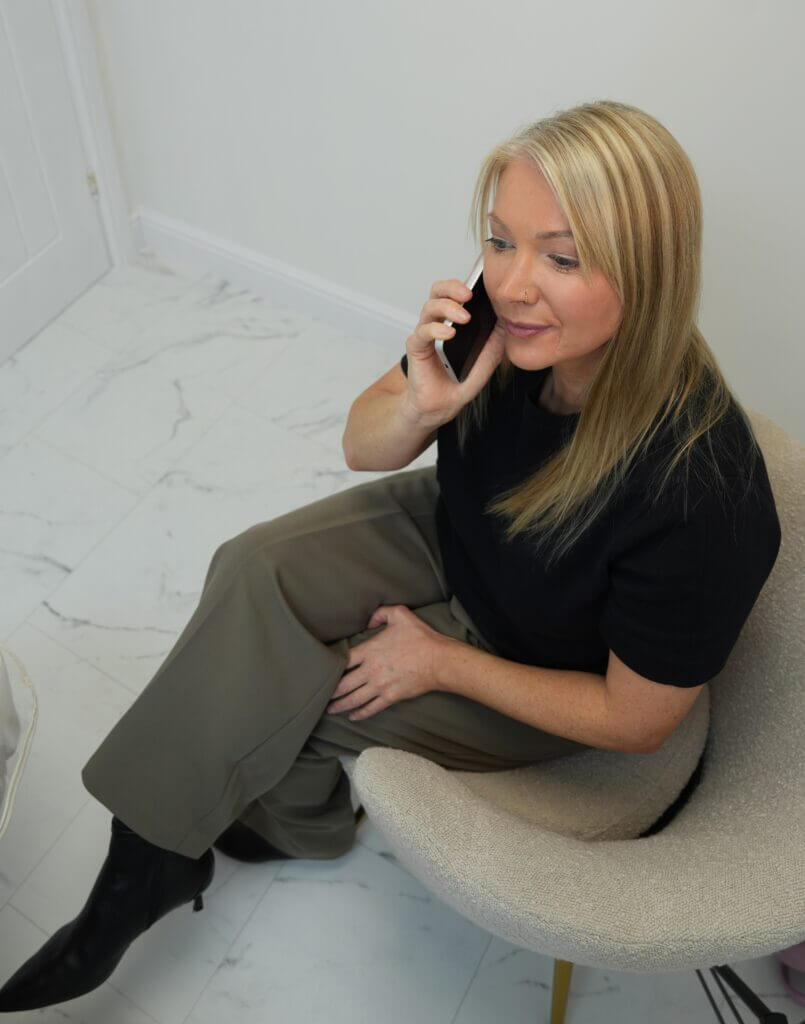
The best time to have this conversation is before you need it
If your child is starting at a Canterbury school, or is already there with an arrangement you are not confident about, get in touch. Bring the six questions above. Ask me all six.